

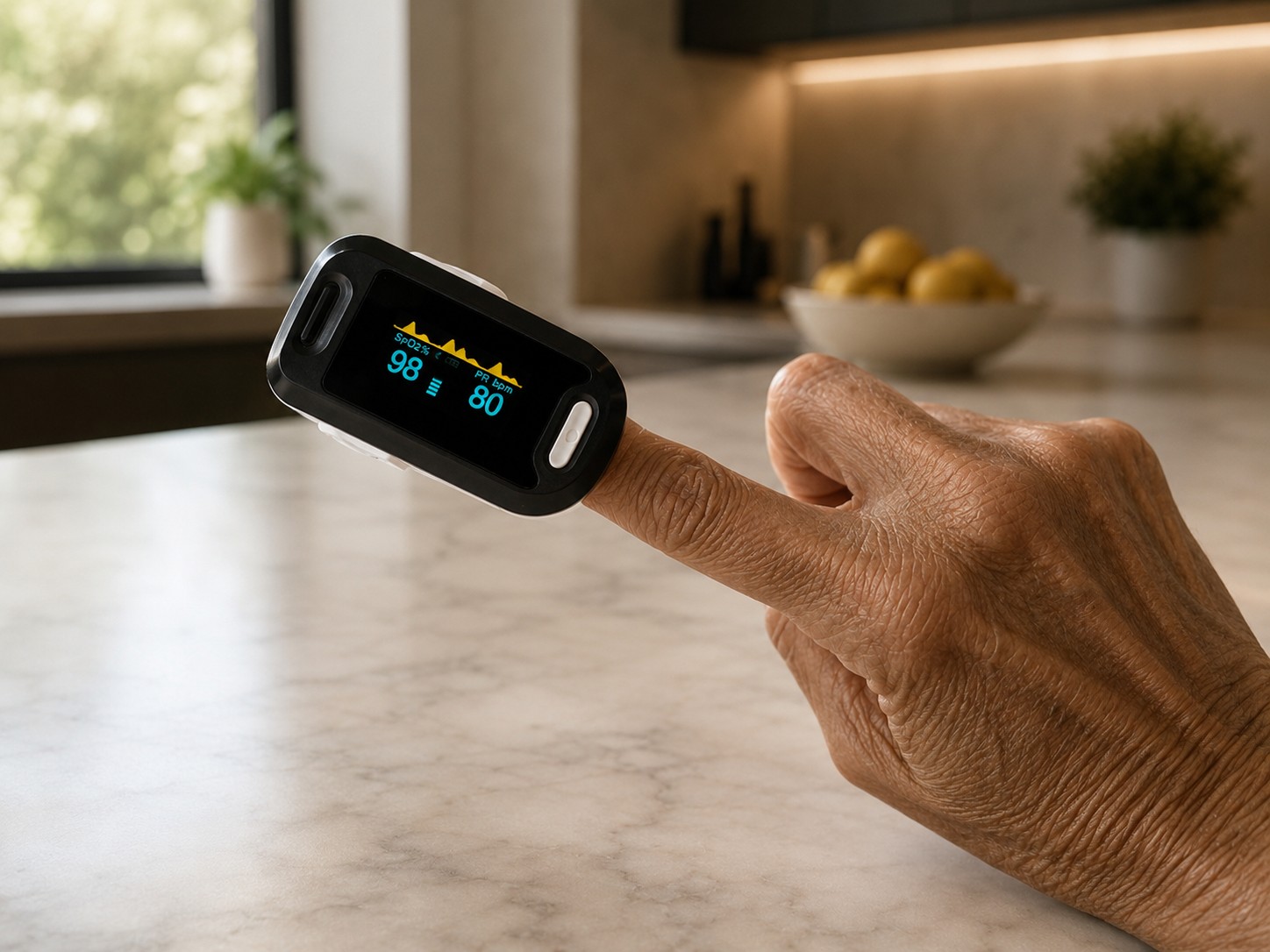
Choosing a pulse oximeter for an elderly parent does not need to mean comparing dozens of features.
For me, the priorities would be a clear display, simple controls and easy everyday use.
I have not personally tested these three pulse oximeters. I compared their available product information and focused on the practical features I would consider when choosing one for an older person.
Disclosure: As an Amazon Associate, Qamaroon earns from qualifying purchases at no additional cost to you.
Want the Quickest Answer?
Want the simplest controls?
I would look first at the Braun Pulse Oximeter 1 because of its one-button operation and rotating display.
Want more information on the screen?
Consider the OxiPro OX2. It displays SpO₂, pulse rate and Perfusion Index and includes an adjustable alert.
Want a simple large-number display?
The AILE Oxygen Monitor is another option to consider, although I would verify the exact model’s regulatory and accuracy information before relying on it for health monitoring.
My 3 Picks at a Glance
| Product | Best For |
|---|---|
| Braun Pulse Oximeter 1 | Simple one-button operation |
| OxiPro OX2 | More on-screen information |
| AILE Oxygen Monitor | Large, simple display |
1. Braun Pulse Oximeter 1
Best for Simple Operation
This is the one I would look at first for an elderly parent who does not want complicated controls.
It has one-button operation and an OLED display that can rotate through several viewing orientations. It also switches itself off after a short period of inactivity. Batteries and a lanyard are included according to the product information.
What I like:
- One-button operation
- Rotating OLED display
- Automatic shut-off
- Batteries included
What to consider: It has fewer additional features than the OxiPro.
My view: A strong option to consider when simplicity matters more than having lots of extra features.
2. OxiPro OX2
Best for More On-Screen Information
The OxiPro OX2 provides more information than a basic pulse oximeter.
Along with SpO₂ and pulse rate, it displays Perfusion Index and includes an adjustable audible and visual low-SpO₂ alert. It uses two AAA batteries, which are included according to the listing.
What I like:
- Colour OLED display
- SpO₂ and pulse rate
- Perfusion Index
- Adjustable alert
- Compact design
What to consider: The additional information and settings could be unnecessary for someone who wants the simplest possible device.
My view: I would consider this for someone comfortable with a little more information on the screen.
3. AILE Oxygen Monitor
Best for a Simple Large Display
The AILE uses one-button operation and displays SpO₂ and pulse rate using large red numbers. The screen can also be viewed in two orientations.
What I like:
- Large numbers
- One-button operation
- Two display orientations
- Automatic shut-off
What to consider: Batteries are not included. I would also verify the exact model’s regulatory status and independent accuracy information before choosing it for health monitoring.
My view: Worth considering if a large, uncomplicated display is the priority.
Still Not Sure? Start Here
If your parent wants the simplest controls, look first at the Braun.
For more information and additional features, consider the OxiPro OX2.
When large numbers and a simple display matter most, consider the AILE.
What I Would Check Before Buying
You don’t need to compare every specification. I would concentrate on four things:
- Controls: Can your parent operate it without becoming frustrated?
- Display: Are the numbers large and easy for them to read?
- Finger fit: Can they position their finger comfortably and correctly?
- Accuracy and suitability: Check the exact model’s instructions, regulatory status and available evidence, particularly if a healthcare professional has asked your parent to monitor oxygen saturation.
A manufacturer’s accuracy claim is not the same as independent clinical validation. If a healthcare professional has asked you to monitor SpO₂ at home, ask whether they recommend a particular device or specification.
Frequently Asked Questions
What does a pulse oximeter measure?
A fingertip pulse oximeter typically displays blood oxygen saturation (SpO₂) and pulse rate. Some models provide additional information.
Is more features better?
Not necessarily. For an elderly parent, a device that is easy to understand may be more useful than one with a long list of features.
Can movement affect the reading?
Yes. Movement can interfere with obtaining a stable reading. Follow the manufacturer’s instructions and remain still while taking the measurement.
Can a pulse oximeter diagnose a medical problem?
A pulse oximeter provides measurements. It does not by itself diagnose the cause of a reading. If it is being used as part of a healthcare plan, follow the advice of the relevant healthcare professional.
My Final Take
If I were narrowing these three down for an elderly family member, I would keep the decision simple.
Braun: My first option for straightforward one-button operation.
OxiPro OX2: A better fit if additional on-screen information is useful.
AILE: Worth considering when large numbers and simple operation are the priority, although I would check the exact model’s regulatory and accuracy information.
I have not personally tested these three models, so I would make the final choice based on the person who will actually use the device.