

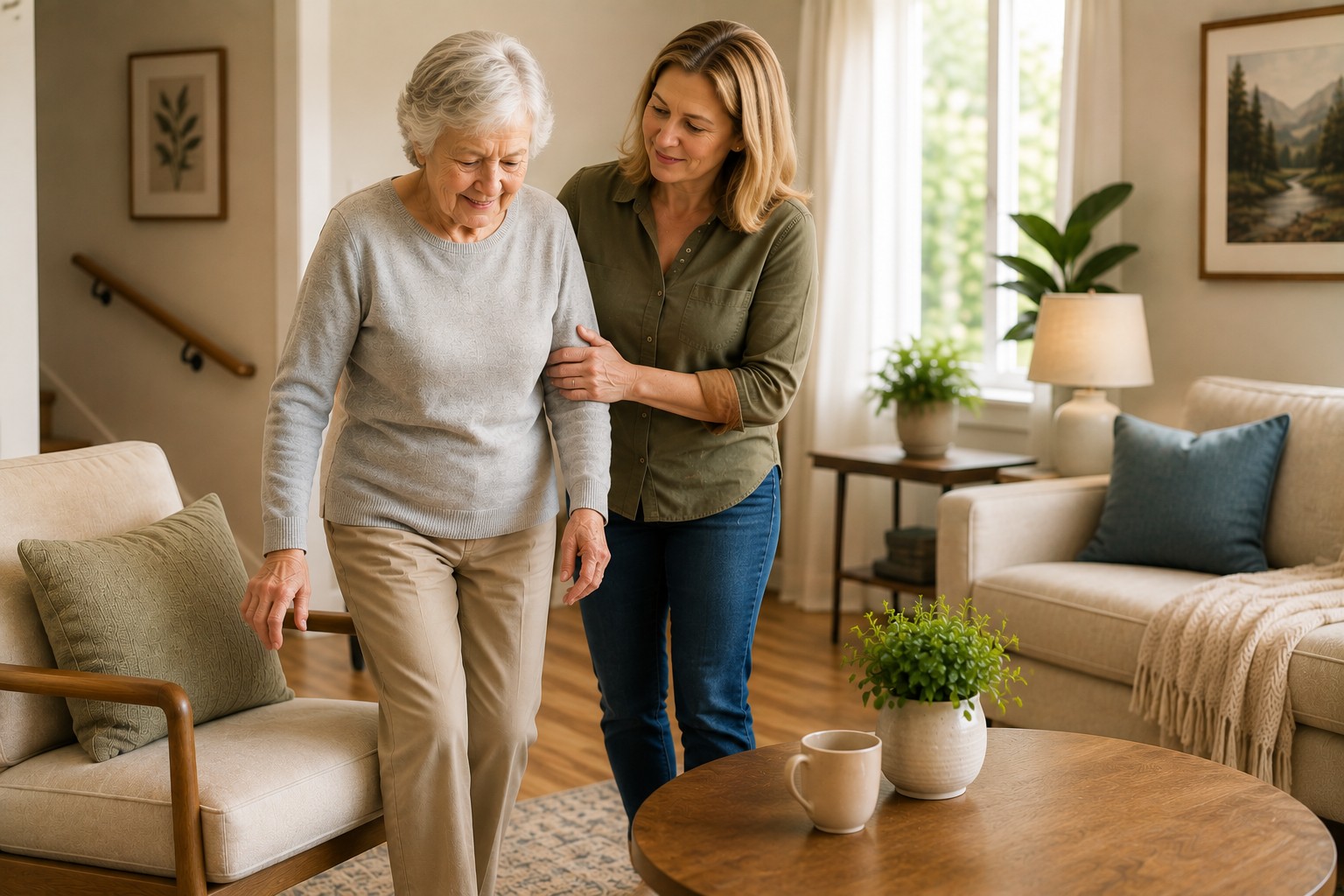
Osteoporosis is a condition I have become more aware of because my mother has been diagnosed with it. As her daughter, it has made me think more carefully about everyday safety at home, particularly falls and situations that could put unnecessary strain on her bones.
My mother’s circumstances are individual, so I would never assume that what works for her will be right for another person with osteoporosis. This guide therefore focuses on general home-safety considerations and the areas caregivers may want to discuss with their parent and healthcare professionals.
Osteoporosis weakens bones and increases the risk of fractures. This means that preventing falls and making everyday activities safer can be particularly important for someone living with the condition.
1. Understanding Osteoporosis and Home Safety
Osteoporosis can develop without obvious symptoms and is sometimes discovered only after a fracture.
For a caregiver, this can make home safety especially important. However, the aim should not be to stop your parent from moving or doing things independently because they have osteoporosis.
Instead, look for avoidable hazards and tasks that have become difficult.
Falls prevention can include keeping the home free from clutter, using suitable footwear, considering appropriate grab rails and addressing problems with balance or mobility.
If you are concerned about your parent’s balance, mobility or history of falls, their GP or another appropriate healthcare professional can help assess what additional support may be useful.
2. Reduce Fall Hazards Around the Home
Start by looking at the routes your parent uses every day.
For a broader look at supporting independence at home, read my guide on how to help an elderly parent live independently and safely at home.
Check hallways, stairs, the bathroom, bedroom, kitchen and entrances to the home.
Keep walkways clear
Remove unnecessary clutter and trailing electrical cables from walking routes.
Loose rugs can also create a trip hazard. Consider removing them or making sure they are appropriately secured.
Frequently used belongings should be kept somewhere that your parent can reach comfortably without unnecessary climbing, stretching or awkward bending. NHS falls guidance recommends reducing clutter, loose wires and rugs and avoiding tasks such as difficult lifting or reaching.
Improve lighting
Make sure stairs, hallways, entrances and frequently used rooms have adequate lighting.
Night lighting can also be useful if your parent regularly gets out of bed during the night.
Consider whether light switches are easy to reach before your parent enters a dark area.
Check stairs carefully
Keep stairs clear and check that handrails are secure.
If your parent has difficulty using the stairs, do not assume that one particular adaptation will be suitable. Their mobility, balance, home layout and individual circumstances should all be considered.
In my mother’s case, she uses a stairlift for her safety and to make moving between floors more manageable. This is something that suits her circumstances, but I would not suggest that everyone with osteoporosis needs a stairlift.
Home adaptations can include options such as handrails, ramps and stairlifts, depending on the person’s needs.
An occupational therapist can help assess the home if you are unsure what type of adaptation would be appropriate.
3. Make the Bathroom Safer
The bathroom deserves particular attention because water and slippery surfaces can increase the risk of a fall.
Look at whether your parent can comfortably get into and out of the bath or shower, use the toilet and move around the room.
Depending on individual needs, useful adaptations may include appropriately positioned grab rails, a non-slip mat, shower seating or other professionally recommended equipment. NHS falls guidance specifically includes non-slip bath or shower mats and bathroom grab rails among measures to consider.
Avoid installing equipment simply because another person uses it. Positioning, height and suitability can matter.
If your parent is struggling with bathroom activities, an occupational therapist can assess their individual needs and home environment.
4. Think About Everyday Bending and Lifting
This is an area where caregivers need to be careful about giving overly restrictive advice.
Having osteoporosis does not mean that someone should stop bending forward.
The Royal Osteoporosis Society explains that bending forward is generally safe. However, uncontrolled, repetitive or sudden movements, particularly when the spine is under load or strain in a curved position, may increase the risk of a spinal fracture.
Rather than telling your parent never to bend, encourage them to follow movement and lifting advice appropriate to their individual fracture risk.
It can also help to organise the home so frequently used items are easy to reach. This may reduce unnecessary climbing, stretching and awkward lifting.
If your parent has previously experienced spinal fractures or is unsure about particular movements, seek advice from an appropriate healthcare professional.
5. Staying Active With Osteoporosis
A diagnosis of osteoporosis does not automatically mean someone should become less active.
Appropriate physical activity can form an important part of maintaining strength, balance and bone health.
However, exercise should suit the person’s abilities, health and fracture risk. Some exercises may need adapting, particularly for someone with spinal fractures or a higher risk of fracture.
The Royal Osteoporosis Society advises that some exercises involving significant spinal flexion can be adapted to protect the back and recommends appropriate techniques such as a hip hinge in relevant situations.
If your parent is uncertain about exercise or has experienced fractures, falls or significant mobility difficulties, professional advice can help them find suitable activities.
The aim should be to help your parent remain active safely rather than making them afraid to move.
6. Choose Footwear Carefully
Footwear is another practical part of fall prevention.
NHS guidance recommends shoes or slippers that fit properly, stay securely on the feet and provide good grip.
Look at what your parent normally wears around the house as well as outdoors.
Loose slippers, worn soles or footwear that slips off easily may be worth reconsidering if balance or falls are already a concern.
Comfort also matters, so footwear needs to suit the individual rather than simply meeting a generic checklist.
7. Make Everyday Tasks Easier
Look at the activities your parent performs regularly and identify tasks that involve difficult reaching, climbing or lifting.
Frequently used kitchen equipment, clothing and toiletries can be moved to more accessible locations.
Your parent may also benefit from suitable equipment that reduces difficult reaching or other movements, but the equipment should address a genuine need.
Do not make extensive changes to someone’s home without involving them.
Ask your parent which activities they find difficult and what they would actually like help with.
8. Nutrition and Osteoporosis
Diet forms part of looking after bone health, but caregivers should be careful about prescribing supplements or specific doses.
Calcium and vitamin D are important for bone health. However, individual requirements and whether supplementation is appropriate can depend on diet, health, medication and other factors.
If you are concerned about your parent’s diet or whether they are getting enough calcium or vitamin D, discuss this with their GP, pharmacist, dietitian or another appropriate healthcare professional.
Do not change prescribed osteoporosis treatment or introduce supplements as a replacement for medical treatment without appropriate advice.
9. What to Do About Falls
If your parent has fallen, what you should do next depends on whether they are injured and their circumstances.
Do not automatically try to lift someone from the floor yourself.
If your parent falls, first check whether they are injured and avoid rushing to move or lift them. If you think they may be seriously injured or need urgent medical help, follow current NHS guidance on what to do after a fall and when to call 999 or NHS 111.
A GP should also be consulted if someone has had a fall or you are concerned about their balance or mobility.
If falls are becoming more frequent, ask about an assessment rather than simply adding more equipment around the home.
10. Know When Changes Need Medical Attention
Osteoporosis requires medical management as well as sensible home-safety planning.
Your parent’s healthcare team can advise about areas such as osteoporosis treatment, fracture risk, bone-health monitoring and other individual considerations.
New or significant pain following a fall should not simply be assumed to be a normal consequence of ageing or osteoporosis.
Likewise, if your parent develops new mobility difficulties, repeated falls or increasing problems with balance, discuss these changes with an appropriate healthcare professional.
As a caregiver, your role is not to diagnose the cause. What you observe at home can, however, provide useful information for the professionals caring for your parent.
11. Keep Your Parent Involved
A diagnosis of osteoporosis does not remove someone’s ability to make decisions about their own home and daily life.
Where possible, involve your parent when considering home adaptations, equipment or changes to routines.
- Ask what makes them feel unsafe.
- Ask which activities have become more difficult.
- Ask what they would like to continue doing independently.
For my mother, a stairlift is one of the adaptations that works for her. Another family may make completely different choices depending on their parent’s mobility, home and preferences.
The goal is to find appropriate support without unnecessarily restricting independence.
Practical Caregiver Tip
Walk through one ordinary day with your parent.
Look at how they get out of bed, use the bathroom, prepare food, use the stairs and move around the home.
Instead of looking only for obvious hazards, notice tasks that involve difficult reaching, unstable furniture, poor lighting or movements your parent finds uncomfortable or difficult.
Write down the areas that concern you.
You can then decide together which simple problems can be addressed at home and which ones would benefit from advice from a GP, physiotherapist, occupational therapist or another appropriate professional.
Final Thoughts
Caring for a parent with osteoporosis has made me more aware that home safety is about more than removing a few trip hazards.
Because my mother has osteoporosis, I naturally think about her risk of falling and how comfortably she can manage everyday activities. Her stairlift is one example of an adaptation that works for her, but her needs are personal to her.
Another person with osteoporosis may have very different mobility, fracture risk and support needs.
For caregivers, the most useful approach is to identify genuine difficulties, involve the parent in decisions and seek professional guidance when an individual assessment is needed.
The aim should not be to make someone afraid of movement or remove their independence. It should be to create a home environment that supports everyday life while taking their individual health and safety needs into account.
This guide provides general caregiving and home-safety information and does not replace individual medical advice. Osteoporosis treatment, exercise, nutrition and fracture-risk decisions should be discussed with an appropriate healthcare professional familiar with your parent’s circumstances.