

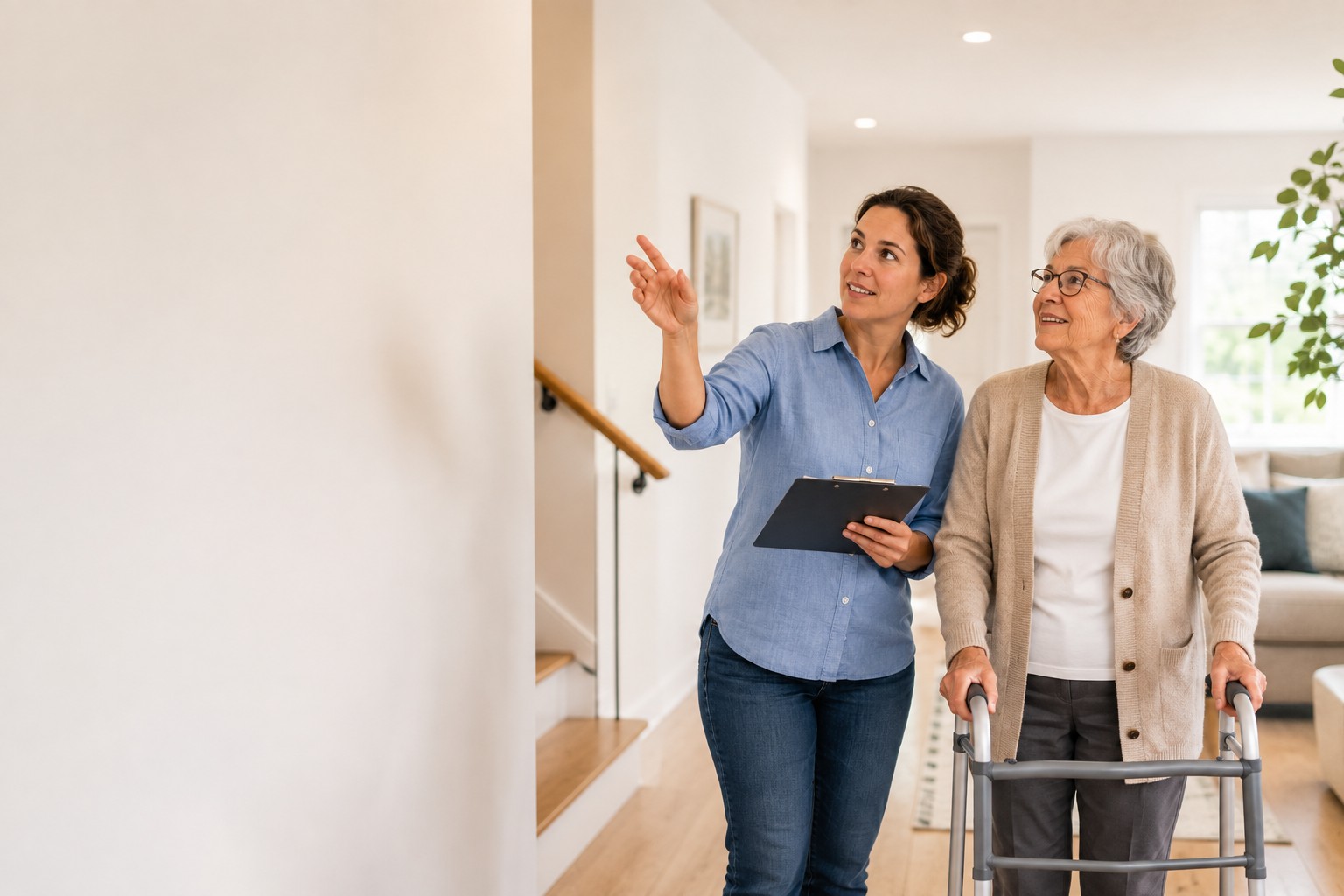
A home safety checklist for an elderly parent can help you identify everyday hazards and areas where additional support may be useful. Small changes to the home can also make everyday activities easier while supporting your parent’s independence.
When an elderly parent wants to continue living at home, small changes to their surroundings can make everyday activities easier and help reduce avoidable hazards.
However, home safety is not about removing every possible risk or filling the house with equipment.
The better approach is to look at how your parent actually uses their home.
Where do they struggle? Where do they feel unsteady? Are there places where they regularly reach for furniture? Have everyday activities become more difficult?
This home safety checklist for an elderly parent can help you walk through the property together and identify areas that may deserve attention
It is designed as a practical caregiver checklist, rather than a medical or professional falls assessment.
How to Use This Home Safety Checklist for an Elderly Parent
Try to complete the checklist with your parent rather than inspecting their home without them.
Ask them whether there are places where they:
☐ Feel unsteady.
☐ Worry about falling.
☐ Have difficulty seeing clearly.
☐ Need to hold onto furniture.
☐ Struggle to sit down or stand up.
☐ Find steps or stairs difficult.
☐ Have difficulty reaching everyday items.
☐ Avoid particular rooms or activities because they no longer feel confident.
If you identify significant difficulties, repeated falls or changes in mobility, consider seeking appropriate professional advice rather than relying on home modifications alone.
Entrance and Hallway Safety Checklist
Start at the main entrance and follow the routes your parent normally takes through the home.
Check:
☐ Walking routes are clear of clutter.
☐ Electrical cables do not cross walking routes.
☐ Loose rugs do not create a trip hazard.
☐ Shoes, bags and other objects are not left where someone could trip over them.
☐ Flooring is secure and in reasonable condition.
☐ Hallways have adequate lighting.
☐ Light switches are easy to reach.
☐ Your parent can enter and leave the home comfortably.
☐ Steps and changes in floor level are easy to identify.
☐ Frequently used doors are easy for your parent to open.
If your parent regularly reaches for walls or furniture while walking through the home, consider whether this reflects a wider mobility or balance problem that needs assessment.
Living Room Safety Checklist
Living rooms can gradually become crowded with furniture, cables and everyday belongings.
Check:
☐ There is enough clear space to walk between furniture.
☐ Electrical cables are kept away from walking routes.
☐ Rugs do not move, curl or create a trip hazard.
☐ Frequently used chairs are stable.
☐ Your parent can comfortably sit down and stand up from their usual chair.
☐ Side tables and other furniture do not obstruct walking routes.
☐ Frequently used items are within comfortable reach.
☐ Lighting is adequate.
☐ Your parent can reach a light switch or lamp without walking through a dark room.
Pay particular attention if your parent uses furniture to pull themselves upright. Furniture that moves or tips should not be relied upon for physical support.
Bedroom Safety Checklist
Think about both daytime use and what happens during the night.
Check:
☐ There is a clear route between the bed and the door.
☐ The route from the bed to the bathroom is clear.
☐ Your parent can get into and out of bed comfortably.
☐ A bedside light is within easy reach.
☐ Glasses are easy to reach if needed during the night.
☐ A phone or personal alarm is accessible if your parent uses one.
☐ Clothing, shoes and other objects are not left on the floor.
☐ Frequently used items can be reached without excessive stretching or bending.
☐ Rugs do not create a trip hazard.
If your parent regularly gets up during the night, walk the route with them and consider what they can actually see before the lights are switched on.
Bathroom Safety Checklist
The bathroom deserves particular attention because water, smooth surfaces and transfers into and out of a bath or shower can create additional difficulties.
Check:
☐ The bathroom floor is kept clear.
☐ Water is cleaned up rather than left on the floor.
☐ A suitable non-slip mat is used in the bath or shower where appropriate.
☐ Your parent can get into and out of the bath or shower comfortably.
☐ Your parent can sit down and stand from the toilet comfortably.
☐ Proper grab rails are available if they have been identified as necessary.
☐ Towel rails are not being relied upon as support rails.
☐ Toiletries are within comfortable reach.
☐ Bathroom lighting is adequate.
☐ Your parent does not need to climb or stretch excessively to reach everyday items.
☐ Any shower seat, toilet aid or other equipment is suitable and stable.
For a more detailed look at this room, read my guide on how to make a bathroom safer for an elderly parent
NHS falls guidance recommends considering measures such as a non-slip bath or shower mat and bathroom grab rails for people at risk of falling. However, the appropriate equipment depends on the individual.
If your parent has difficulty bathing or using the toilet independently, consider asking for a home assessment rather than choosing substantial adaptations yourself.
Stair Safety Checklist
If the property has stairs, watch how your parent actually uses them.
Check:
☐ Stairs are free from clutter.
☐ Stair coverings are secure.
☐ The staircase has adequate lighting.
☐ Your parent can reach the light switch before using the stairs.
☐ Existing handrails are secure.
☐ Your parent can comfortably use the handrail.
☐ Objects are not routinely left on the stairs.
☐ Your parent avoids carrying large objects that prevent them from using available support.
☐ The top and bottom of the staircase are kept clear.
If stairs have become difficult, do not assume one particular adaptation will suit your parent.
NHS guidance lists adaptations such as stairlifts and banisters among possible home modifications, but an individual home assessment can help determine what is appropriate.
Kitchen Safety Checklist
The kitchen involves reaching, carrying, heat and sometimes bending or stretching.
Check:
☐ Frequently used food and equipment are within comfortable reach.
☐ Your parent does not routinely need to climb on chairs or stools.
☐ Heavy items are stored somewhere manageable.
☐ Walking routes remain clear.
☐ Spills are cleaned up promptly.
☐ Lighting over preparation areas is adequate.
☐ Your parent can comfortably operate commonly used appliances.
☐ Pan handles and other objects do not unnecessarily obstruct movement.
☐ Your parent can prepare food without repeatedly stretching or bending awkwardly.
If an everyday kitchen task has become difficult, look at the specific problem before buying equipment.
Sometimes reorganising storage may be enough. More significant difficulties may benefit from an occupational therapy assessment.
Footwear and Clothing Checklist
What your parent wears around the home can also affect mobility.
Check:
☐ Shoes or slippers fit properly.
☐ Footwear stays securely on the feet.
☐ Soles provide suitable grip.
☐ Footwear is not badly worn.
☐ Clothing does not trail along the floor.
☐ Dressing does not require unsafe reaching or balancing.
The NHS recommends footwear that fits well, does not slip off and has good grip for people at risk of falls.
Lighting Checklist
Walk through the home and look for areas that remain poorly lit.
Check:
☐ Hallways have adequate lighting.
☐ Staircases are well lit.
☐ The bathroom route is visible at night.
☐ Entrances have appropriate lighting.
☐ Light switches are accessible.
☐ Bulbs that have stopped working are replaced.
☐ Your parent does not need to walk through a dark area to reach a light switch.
Lighting cannot correct an eyesight problem.
Regular eye tests are also included in NHS falls-prevention advice. Hearing concerns are also worth discussing with an appropriate healthcare professional, particularly if your parent is experiencing problems with balance.
Medication and Health Checklist
Some fall risks cannot be identified by looking around the house.
Consider:
☐ Has your parent fallen recently?
☐ Have they experienced near-falls?
☐ Have they become noticeably less steady?
☐ Do they experience dizziness or lightheadedness?
☐ Has their walking changed?
☐ Have they developed difficulty standing from a chair?
☐ Are you concerned that medication may be affecting their balance?
☐ Are their eyesight and hearing being checked appropriately?
If your parent has become increasingly unsteady, you may also find my guide to helping an elderly parent with balance problems at home useful.
If medication is a concern, speak to a GP or pharmacist. Do not stop or change prescribed medication yourself.
Current NICE guidance recognises that falls can involve multiple factors and recommends comprehensive assessment for people who meet relevant criteria rather than treating every fall as having the same cause.
Mobility Aid Checklist
If your parent uses a walking stick, frame, rollator or another mobility aid, check:
☐ They use the aid as advised.
☐ It appears to be in good condition.
☐ It is easily accessible when needed.
☐ It is not routinely left on the other side of the room.
☐ The home has enough space to use it appropriately.
☐ Rugs, furniture and narrow routes do not unnecessarily obstruct it.
If your parent is considering a walking aid for the first time, professional assessment may be preferable to simply buying one based on someone else’s recommendation.
Outdoor Safety Checklist
Do not stop your assessment at the front door.
Check:
☐ Paths are reasonably clear.
☐ Steps are easy to see.
☐ Existing handrails are secure.
☐ Outdoor lighting is adequate.
☐ Leaves, water, ice and other temporary hazards are dealt with when possible.
☐ Garden equipment and hoses are not left across walking routes.
☐ Your parent can reach bins and other frequently used areas comfortably.
☐ The entrance can be used safely in different weather conditions.
If outdoor access has become difficult, a home assessment may identify suitable adaptations. NHS guidance includes ramps, step rails and outside lighting among examples of possible home adaptations.
Emergency Planning Checklist
Even after sensible home-safety changes, it is not possible to guarantee that someone will never fall.
Think about what would happen if your parent needed help.
Check:
☐ Important telephone numbers are accessible.
☐ Your parent can reach a telephone.
☐ Their mobile phone is regularly charged if they rely on one.
☐ A personal alarm has been considered if appropriate.
☐ Trusted family members know how to access the property in an emergency.
☐ Your parent knows how they would call for help after a fall.
The NHS recommends considering a personal alarm or carrying a mobile phone for people at risk of falls.
For a more detailed look at reducing fall hazards, read my guide on how to prevent falls at home for an elderly parent.
When to Consider a Professional Home Assessment
A caregiver checklist can help identify obvious problems, but it does not replace a professional assessment.
NICE recommends home-hazard assessment and intervention using a validated tool for people for whom it is indicated. NICE also says this can be carried out by an occupational therapist or another appropriately trained professional.
In England, the NHS says you can ask your local council’s social services department for a home assessment if someone needs help with everyday tasks or is worried about falling. The assessment is free.
For more information, read the NHS guidance on home adaptations and assessments.
My Home Safety Action List
After completing the checklist, avoid trying to fix everything at once.
Choose the issues that require attention and write down what you plan to do.
Priority 1: Needs attention soon
Priority 2: Changes we would like to make
Needs professional advice
Questions to discuss with a GP, pharmacist, physiotherapist or occupational therapist
Date checklist completed: __________________
Date to review again: __________________
Practical Caregiver Tip
When using this home safety checklist for an elderly parent, walk around the home together rather than completing it from memory.
Do not rely only on what the room looks like.
Watch how your parent gets out of their favourite chair, walks to the bathroom, uses the stairs, prepares a drink and gets into bed.
Those everyday activities can reveal difficulties that you might miss during a quick inspection.
Most importantly, ask your parent what concerns them.
The aim is to make their home work better for them, rather than making changes based solely on what someone else thinks an elderly person’s home should look like.
You can also read my guide on how to help an elderly parent live independently and safely at home for a broader look at supporting independence.
Final Thoughts
A home safety checklist for an elderly parent can help you identify avoidable hazards and start useful conversations about safety at home
Start with clear walking routes, lighting, bathrooms, stairs, footwear and frequently used areas. Then consider less visible factors such as changes in balance, eyesight, hearing and medication.
Do not assume that every older person needs the same equipment or adaptations.
If your parent has experienced falls, has worsening mobility or needs substantial changes to their home, professional assessment may be appropriate.
Most importantly, keep your parent involved in decisions about their own home.
The purpose of the checklist is to support safety and independence, not to remove your parent’s control over how they live.
Medication is only one part of staying safe at home. You can also use my home safety checklist for an elderly parent to review other areas of everyday safety.
This checklist provides general caregiving and home-safety information. It is not a clinical falls risk assessment and does not replace an individual assessment or advice from an appropriate healthcare or social care professional.